
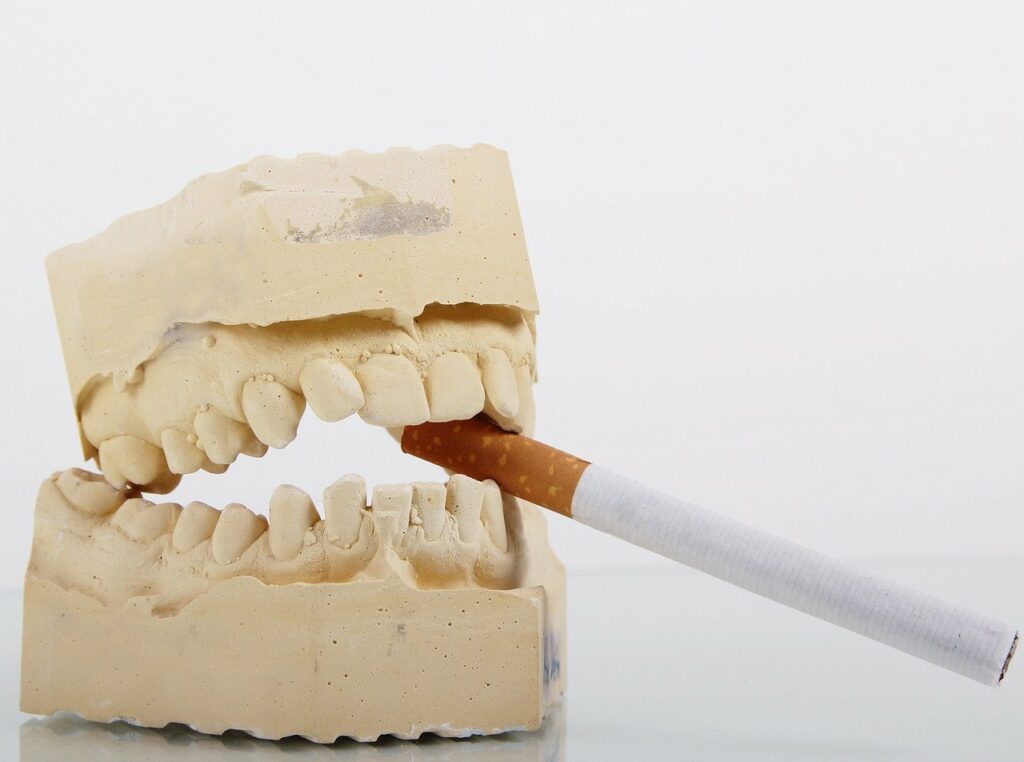
Cigarette Teeth: How Smoking Affects Your Teeth, Gums, and Smile

Have you ever asked yourself “Is smoking bad for your teeth?” The short answer is yes.

Smoking can change how your teeth look, how your gums function, and how healthy your mouth stays over time. If you’re a smoker, you may notice stubborn yellow stains or bad breath. But things can quickly get worse than that. Gum disease, tooth loss, slow healing, and oral cancer are all strongly linked to tobacco use.

Here’s the good news: Many of these problems can be treated or managed with professional dental care.

Below, we’ll explain how cigarettes affect your mouth, what smoker’s teeth look like, and what dentists can do to restore your smile.

How Cigarettes Affect Your Teeth and Mouth

So, what does smoking do to your teeth? To fully understand the answer, you need to know more about tobacco smoke in general.

Tobacco smoke contains thousands of chemicals that come into direct contact with your teeth, gums, tongue, and oral tissues. When someone smokes regularly, these chemicals can start to damage the mouth.

Smoking weakens the immune system, making it harder for the gums to fight infection. It also reduces blood flow to the gums, which slows healing and hides early warning signs of gum disease. At the same time, tar and nicotine cling to enamel and create stubborn stains.

Because the mouth is directly exposed to the smoke, it shows damage faster than other parts of your body. Dentists are often the first to notice early signs of smoking-related damage.

Short-term effects can include staining, bad breath, dry mouth, and faster plaque buildup. Longer-term damage ranges from gum disease to bone loss around the teeth to tooth loss.

The key thing to understand is that damage to your teeth from smoking doesn’t happen overnight. It builds slowly and becomes worse over time.

Luckily, many of these issues are fixable. Professional cleanings, gum therapy, whitening treatments, and restorative dentistry can help repair or improve smoker’s teeth.

Check out this FDA resource for more information about how tobacco use affects oral health.

What Smoker’s Teeth Look Like (Stains, Plaque, and Tartar)

One of the most common signs of cigarette smoker teeth is discoloration. Tar and nicotine attach to the enamel and gradually turn teeth yellow or brown.

These stains usually develop along the gumline first, but over time, they can darken the entire surface of the tooth. This is why smokers’ teeth often look darker or duller than non-smokers’ teeth.

Smoking also accelerates plaque buildup. Plaque is a sticky film of bacteria that forms on teeth each day. When plaque isn’t removed thoroughly, it hardens into tartar.

Tobacco use speeds up this process, which means smokers often develop thicker tartar deposits along the gumline.

Many people try to remove stains with extra brushing or whitening toothpaste. But brushing alone usually isn’t enough to remove tobacco stains once they’ve bonded to enamel. You’ll need professional dental cleanings to remove this hardened plaque and tartar. These cleanings are important because they help protect your teeth and gums from further damage.

For deeper staining, your dentist may recommend professional teeth whitening treatments. They can significantly brighten teeth that have been darkened or stained by tobacco. There are several teeth whitening options to choose from.

Gum Disease and Tooth Loss From Smoking

Gum disease is a serious oral health problem we see with smoking.

Smoking significantly increases your risk of developing gingivitis, the earliest stage of gum disease. Normally, inflamed gums bleed when brushing or flossing. However, smoking reduces blood flow, which can make it hard to spot this symptom.

Because the bleeding is less noticeable, gum disease in smokers often goes undetected until it has already advanced.

If left untreated, gingivitis can develop into periodontitis. This advanced infection damages the gums, connective tissues, and bone that support the teeth.

Over time, the gums can begin to recede and pull away from the teeth. As this happens, teeth may loosen, shift, and in severe cases, fall out.

This is why people sometimes search for “smoking teeth falling out.” Unfortunately, smoking does increase the risk of losing teeth due to gum disease.

Early gingivitis treatment can help protect your smile. Dentists may recommend specialized cleanings and gum therapy to control infection and prevent further damage.

Bad Breath and Dry Mouth Caused by Cigarettes

Another issue many smokers notice is lingering bad breath.

Cigarette smoke leaves chemical residue in the mouth that creates a strong smell. These compounds stick to the tongue, teeth, and soft tissues, which is why the smell doesn’t go away after brushing. Mouthwash may temporarily mask bad breath, but it doesn’t address the underlying causes.

Smoking also lowers the amount of saliva your body makes. Saliva helps rinse away bacteria and neutralize harmful acids in the mouth. When saliva levels drop, your mouth becomes dry. This condition is known as dry mouth.

Dry mouth allows bacteria to grow more easily. And as bacteria increase, they produce acids that weaken the enamel and increase the risk of cavities.

This may lead some people to wonder, “Does smoking cause cavities?” Although smoking doesn’t directly cause cavities, the dry mouth and plaque buildup associated with smoking do make them more likely.

In addition to that, smoking often causes sensitivity due to irritated gums or worn enamel.

Smoking, Healing Problems, and Dental Treatment Risks

Smoking doesn’t just damage your teeth and gums. It can also make it harder for your mouth to heal after dental procedures.

Smoking narrows blood vessels and reduces the amount of oxygen that reaches your tissues. Because good circulation is important for healing, smokers often take longer to recover.

This can affect procedures like tooth extractions, gum treatments, and dental implants.

For dental implants to be successful, the jawbone must fuse with the implant through a process called osseointegration. Smoking can interfere with this process and lead to implant failure.

This is why dentists often recommend quitting smoking before major dental procedures whenever possible.

Cigarettes, Oral Cancer, and Early Warning Signs

There’s a strong link between tobacco and oral cancer.

Cigarette smoke contains carcinogens that can damage cells in the mouth, tongue, throat, and lips. Over time, these damaged cells may develop into cancer.

Early symptoms are not always painful, which is why routine dental exams are so important.

Warning signs may include sores that don’t heal, red or white patches in the mouth, trouble swallowing, ongoing throat irritation, or unusual lumps.

Catching oral cancer early saves lives. This is why routine oral health screenings are so important.

Can the Damage Be Reversed? How Dentists Fix Smoker’s Teeth

Many people worry that smoker’s teeth can’t be repaired. In reality, dentists can often restore both the appearance and function of teeth affected by smoking.

Professional cleanings can remove plaque and tartar that cause staining and gum disease. And teeth whitening treatments can remove deep discoloration caused by tobacco.

In more advanced cases, restorative procedures may be needed:

  • Crowns can strengthen damaged teeth and make them look better.
  • Implants may replace missing teeth and restore normal mouth function.
  • Dentures and partial dentures can replace multiple missing teeth.

Quitting smoking often leads to smoother treatment and faster healing.

How Quitting Smoking Improves Your Oral Health

When you stop smoking, your oral health may start to improve right away.

Your gums begin to get better blood flow, which helps them heal and fight infection more effectively. This can slow or even stop the progression of gum disease.

Many people also notice fresher breath and reduced staining. Dental treatments like whitening and gum therapy often work better once smoking is no longer part of the picture.

Just as importantly, quitting smoking lowers your long-term risk of oral cancer and tooth loss. Over time, this makes a big difference for both your oral health and your overall health.

When to See a Dentist About Smoking-Related Tooth Damage

Smokers and former smokers should see their dentist regularly to monitor their oral health.

Certain symptoms should never be ignored. Lingering bad breath, bleeding gums, gum recession, loose teeth, tooth sensitivity, mouth sores that don’t heal, red or white patches, jaw pain, or swelling could signal a bigger problem.

Dentists evaluate smoking-related damage using several methods. They measure gum pocket depth, take X-rays to check for bone loss, and perform oral cancer screenings.

Early treatment often prevents more serious complications and lowers your treatment costs.

If severe pain, swelling, or sudden dental problems occur, you may need emergency dental care.

How Lamar Dental Can Help With Cigarette-Related Tooth Damage

Now that you know what smoking can do to your teeth, it’s time to look closer at how we can help.

At Lamar Dental, our goal is to help you improve your oral health with a supportive, non-judgmental approach.

During a comprehensive exam, our dental team will evaluate staining, tartar buildup, gum health, and signs of oral cancer. We may also take X-rays to assess your bone health and detect hidden damage.

From there, our dentist will create a personalized treatment plan just for you. It may include professional cleanings, gum disease treatment, cosmetic improvements like whitening, or restorative solutions such as crowns, implants, or dentures.

We also walk our patients through their treatment timelines and options. The dental team explains how quitting smoking can improve healing and long-term results.

If you’re concerned about cigarette teeth or the effects of smoking on your teeth, a professional evaluation is the best step to take.

Book an appointment online to schedule an exam and receive a personalized care plan.

Did you like this? Share it!

0 comments on “Cigarette Teeth: How Smoking Affects Your Teeth, Gums, and Smile

Comments are closed.